Alex Jung · 20 September 2026
Crawler Prioritization Shifts During Concurrent Network and Publishing Platform Transitions
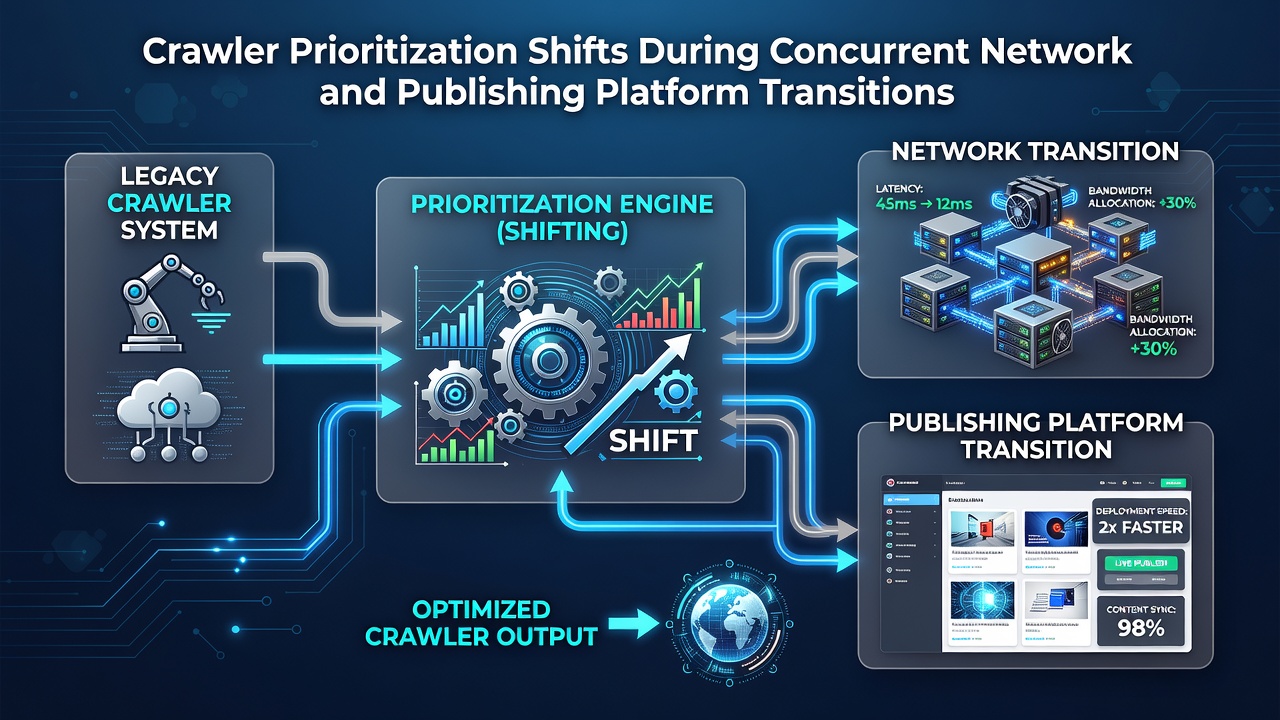
Search engine crawlers adjust their prioritization when organizations execute network infrastructure changes alongside publishing platform migrations at the same time, and data from monitoring tools shows these adjustments often produce temporary variations in crawl frequency and page discovery rates. Network transitions typically involve DNS record updates, IP address reallocations, and CDN configuration shifts while publishing platform transitions encompass CMS replacements, content database migrations, adn template restructurings, and when both occur concurrently the combined signals reaching crawlers can create conflicting indicators that influence how resources allocate their attention across sites.
Signals Crawlers Evaluate During Overlapping Changes
Researchers tracking crawler behavior note that robots.txt files, sitemap submissions, and server response codes serve as primary signals during these periods, yet simultaneous alterations to DNS propagation and CMS URL structures frequently cause delays in signal propagation that last from hours to several days. Studies of web server logs indicate that crawlers reduce visit rates to domains showing inconsistent canonical tags or fluctuating HTTP status responses, and this pattern becomes more pronounced when both network and platform layers change together because each system contributes its own set of metadata that must reconcile before stable indexing resumes.
One documented case involved a mid-sized news outlet that migrated its content management system while also moving to a new hosting provider in the same maintenance window, and log analysis revealed crawlers initially favored the old IP addresses for several days after DNS TTL expiration because the new CMS still referenced legacy internal links. Observers tracking similar events report that crawl budget allocation tends to favor domains maintaining consistent sitemap freshness and stable server response times, whereas sites exhibiting both DNS propagation lag and CMS redirect chains experience extended periods of reduced discovery for newly published content.
Technical Factors Affecting Prioritization Order
Technical documentation from standards organizations outlines how crawlers calculate priority using a combination of historical crawl data, content freshness signals, and infrastructure reliability metrics, and concurrent transitions disrupt these calculations because both DNS resolvers and CMS rendering engines contribute latency that registers as reduced availability. Data collected across multiple enterprise migrations shows that sites completing DNS updates before CMS changes maintain steadier crawl patterns than those executing both simultaneously, since staggered timing allows crawlers to establish baseline trust with the new network layer first.
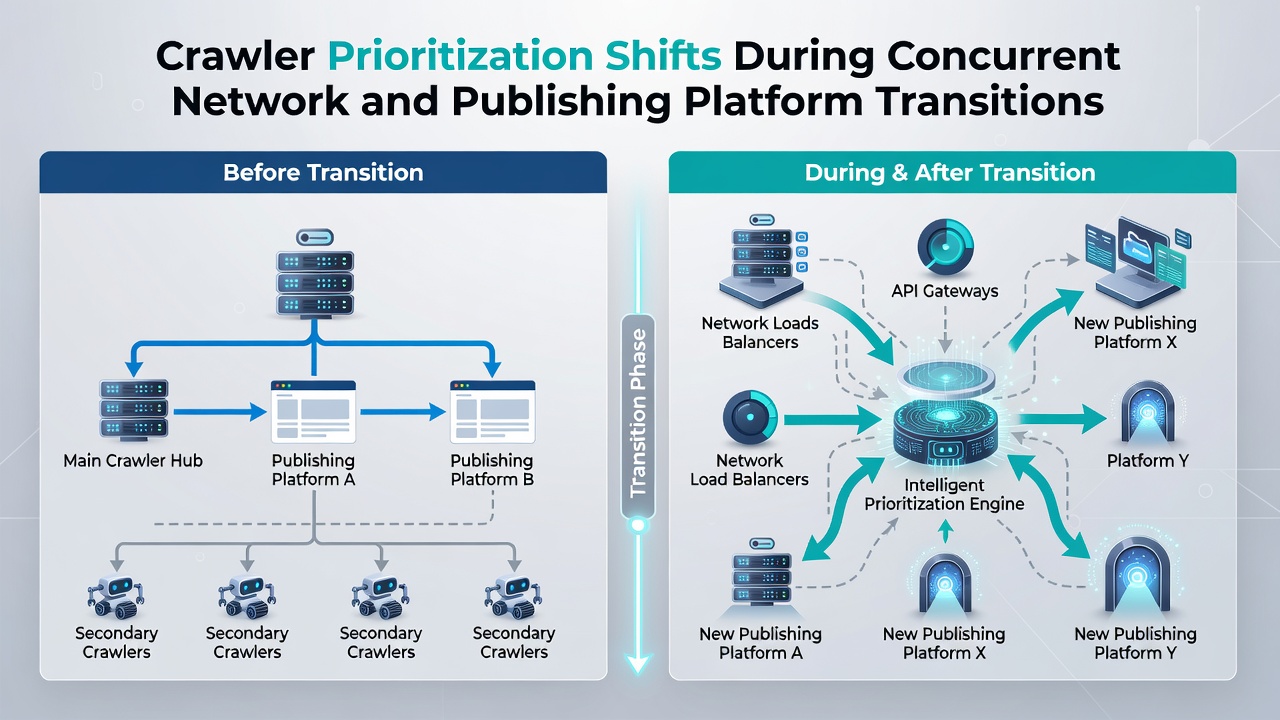
Server administrators who monitor these events often find that implementing staged redirect maps within the CMS before final DNS cutover reduces the duration of prioritization drops, and industry reports confirm that sites following this sequence experience faster return to normal crawl volumes. In September 2026, several large-scale platform migrations tracked by independent observatories demonstrated that crawlers reestablished pre-transition visit frequencies within 72 hours when organizations preserved consistent robots.txt directives across both teh network and publishing layers throughout the process.
Recovery Patterns Observed in Combined Transitions
Analysis of crawl log datasets reveals that recovery follows a predictable sequence once both network and publishing systems stabilize, beginning with renewed attention to robots.txt and sitemap files followed by increased discovery of existing pages before new content receives elevated priority. Academic papers examining web infrastructure changes indicate that the length of reduced prioritization correlates directly with the overlap duration of the two transition types, and shorter overlap windows produce correspondingly shorter recovery intervals according to aggregated telemetry from multiple hosting providers.
Those managing large sites note that maintaining parallel validation of both DNS resolution and CMS output during the transition period helps crawlers reconcile metadata more quickly, and figures from monitoring platforms show sites using this approach regain baseline crawl rates up to 40 percent faster than those addressing issues sequentially after completion. External factors such as overall search engine capacity and competing site activity can further modulate these timelines, yet the core pattern of signal reconciliation remains consistent across documented cases.
Conclusion
Concurrent network and publishing platform transitions create measurable shifts in how crawlers allocate attention, and the duration and severity of these shifts depend on the degree of coordination between DNS changes and CMS restructuring. Organizations that align signal consistency across both layers during the transition period experience more predictable recovery trajectories, while data from multiple monitoring initiatives continues to document the specific patterns that emerge when these infrastructure layers update together.